
Aug. 13, 2020

The New Construction Process

The New Construction Process

If you are interested in buying new construction, know that the process differs somewhat from buying a pre-owned home. I can help you through the process!

1. Decide on Your Builder & Homesite.

If you are looking at a particular neighborhood, find out if there is one builder or if the developer allows you to bring in your own builder. If you are looking at building on a lot that is not restricted to a particular builder, it’s important to research builders in your area to find one that is reputable and stands by their work. Meet with builders before you make your selection. It’s important that they are organized and communicate well.

2. Obtain Pre-approval or Proof of Funds.

Builders or developments often work with particular mortgage companies and will offer discounts on closing costs for using their “preferred” lender. Whether you use the builder’s lender or someone else, you will need to get pre-approved for financing. If you are not financing, obtain proof of funds from your financial institution.

3. Sign a Contract with Your Builder.

Builders use their own contracts that are similar to a regular sales contract, but include additional terms specific to the building process, such as at what points during building the contractor gets paid, and what options you have to choose from. Your agent can help you interpret the terms of the builder’s contract before you sign.

4. Secure a Loan.

Once you sign your contract, the lender will need to get started on your loan application. It’s important that you provide them any information they ask for in a timely manner.

5. Select Your Options.

There will be a lot of decisions to be made throughout your build. Being prepared with your choices at each stage will help keep the build on schedule. Most builders have someone who will work with you to let you know what stage they are on and which decisions are coming due and when they need to be made. If your build is custom, you will need to do a lot of research into finishes, fixtures, colors, hardware, and appliances so you know what you want and what you can afford.

6. Home Walk Throughs Throughout the Building Process.

You will need to check on every phase of construction to double check that everything is done according to plan. Even the best builders have miscommunications, mix-ups on orders, or problems with installations. Plan on visiting the home daily once it gets dried-in.

7. Optional Inspection.

Even though your home is brand-new, you might still want to have a home inspection done. Sometimes an inspector will catch something that slipped past the contractor and code enforcement.

8. Closing day!

Closing day on new construction differs slightly from a pre-owned home in that there is often a “punch list” of items the builder is responsible for finishing up either on closing day or shortly afterwards. This may include cleaning, touch-up painting, installing landscaping, or changing out locks. You should have the opportunity to go through the house with the builder shortly before closing to add items you notice to the punch list.

Posted in Home Trends
July 31, 2020

Staging Strategies for Your Home


Staging your home is all about putting the best foot forward for potential buyers. By highlighting its most desirable features, you can draw more interest for your home and leave a lasting impression that is sure to help you sell it more quickly. Here’s what you should keep in mind as you prepare for your next open house or viewing!

Help them visualize it as their own. Make it easier for buyers to imagine themselves making your house their home by removing personal memorabilia, knick-knacks, and photos. Instead replace them with simple décors, such as paintings, nature images, and plants.

Think sleek instead of comfy. Modern-day buyers are leaning toward modern, crisp, clean interiors over comfy, homey looks. When staging your home, keep a minimalist mindset, and incorporate bright colors and metal accents.

Deep clean the small spaces. It's obvious to say you should clean your home before viewing, but don’t forget to cover your bases by deep cleaning the small spots. Take time to scrub porous areas like grout that may hold on to stains and baseboards where small pet hairs and dust love to cling.

Spruce up your landscaping. The first impression your home gives to potential buyers is its exterior. Ensure you have a freshly mowed lawn, neat hedges and shrubbery, bright flowers, and a clean driveway.

Set the mood. A home is so much more than just the way it looks, so you need to appeal to the other senses. Prior to having potential buyers over, set the mood by burning delicious smelling candles and selecting an upbeat, happy soundtrack to play in the background.

When you're ready to take the next step toward selling your home, we are here to help. Our comprehensive marketing plan will get your home seen by thousands of motivated buyers.

Posted in Home Trends
June 29, 2020

Tips for Relocating to a New Town


Moving is always hard work but moving to a new town can be exceptionally hard, even when you are excited about your next chapter in life. As your real estate agent, I can refer you to an agent in your new town to help you find your new home, and also give you referrals for other services you will need, such recommendations for hotels, restaurants, child care, and pet boarding while you get settled.

To help make the logistics of your relocation as smooth as possible, here are some to-do items you may not have thought about yet.

  1. As soon as you know you will be moving, start to organize your belongings, getting rid of things you don’t want to take with you.
  2. Collect used packing materials like boxes and bubble wrap to reduce what you will need to purchase.
  3. Start packing items you don’t use daily, like family mementos, holiday decorations, books and décor accessories.
  4. Get an estimate from moving companies and schedule a tentative date with the one you choose.
  5. Visit your new town, if possible, and arrange a driving tour with a real estate agent that can show you different neighborhoods, shopping centers, and the locations of hospitals, schools, churches, and recreational facilities or parks.
  6. When you know what school district your children will enroll in, visit the schools your children will attend to meet the principal and tour the grounds.
  7. Once you know what neighborhood you will be living in, join Nextdoor or the neighborhood Facebook page to keep abreast of what’s happening there.
  8. Locate and pack your important papers and ID’s so that you know where they are at all times.
  9. If your company is offering you relocation services, make sure you know all the terms. Often, they will cover items you might not think about, like the cost of shipping your car or professional organizers to help you unpack. They may also be negotiable in what they cover.
  10. Save all your moving expense receipts. If you are moving 50 miles or more from your old job to start a new job, your expenses may be tax deductible.
  11. Make a list of services you need to terminate in your old town and services you need to initiate in your new town.
  12. If you have doctor, dentist, veterinary, or hair appointments scheduled ahead of time, call and cancel them.
  13. Remember to transfer subscriptions for things like magazines, food deliveries, and mail-order prescriptions.
  14. Change your delivery address on your Amazon or other shopping accounts so you don’t accidentally ship items to your old address.
  15. Schedule an appointment to transfer your automobile registration and driver’s license if moving to a new province.
  16. Meet new people, experience new food and places and you certainly won’t be bored!
June 1, 2020

How to Move Safely During the Pandemic

With travel restrictions and social distancing in place, many people are postponing their moving plans.

Move.org recommends you consider these questions before planning your move:

  1. Is COVID-19 spreading in the area where you’re going?
  2. Will you or your travel companion(s) be in close contact with others during your trip?
  3. Are you or your travel companion(s) more likely to get severe illness if you get COVID-19?
  4. Do you have a plan for taking time off from work or school, in case you are told to stay home for 14 days for self-monitoring or if you get sick with COVID-19?
  5. Do you live with someone who is older or has a serious, chronic medical condition?
  6. Is COVID-19 spreading where I live when I return from travel?

If you can’t put off your move, don’t worry! You can get it done with some careful planning. Here are some steps you can take to move safely.

  1. Talk to your moving company. Moving companies are taking several precautions to protect their customers, including following social distancing guidelines, providing estimates based on photos or videos of your belongings, sanitizing trucks and equipment, and wearing masks and gloves.
  2. Use a packing calculator, like this one from Moving.com so you can purchase all your supplies in one trip to the store.
  3. Do your own packing to reduce contact with moving personnel. The coronavirus can live on cardboard for 24 hours, so any recycled boxes you are using should have sat untouched for at least 24 hours before you use them.
  4. Use door stops to hold doors open to reduce toughing door handles. Have your pets secured so you don’t have to worry about the doors being left open.
  5. Pack hand soap and paper towels in a marked box so they can be last on and first off the truck.
  6. When you arrive at the new home, disinfect door handles, cabinet and drawers pulls, appliance handles, and light switches first, even if the home was professionally cleaned before you arrived.
May 15, 2020

Tips for Virtual Home Shopping During COVID-19

The COVID-19 pandemic has changed so much of the way we live right now, home shopping included. With social distancing mandates in place, we certainly can’t be going in and out of strangers’ homes touching doorknobs, light switches, and appliances.

If you are needing to move soon, however, don’t despair! We can help you find a home and stay safely within the health guidelines. Here are some tips for home shopping during the pandemic.

  1. Start with a Virtual Tour. Many sellers are making virtual home tours available for buyers. The technology for virtual tours has improved greatly in the last couple of years, and will help you feel what it is really like to walk through the rooms. Enjoy a Virtual Walk through of our listings by clicking HERE!  
  2. Be selective about the homes you choose to visit. If you are the type of buyer that likes to cast a wide net and see everything in your price range, you may have to change your methodology. Try to narrow down your list of homes to visit to your very top choices.
  3. Take a Facetime tour with your agent. Your agent, can take a video for you or Facetime with you while you tour the home.
  4. Scheduling a live showing. When you find a home you really must see in person, don’t bring anyone with you that isn’t vital to the decision-making process. Besides the fact that sellers probably don’t want a family of six parading around, with fewer distractions you can get a better look and eliminate the need to come back a second time. Take lots of pictures and measurements so you don’t miss anything.
  5. Put safety first when touring. You want to safeguard your own health, and you want the sellers to appreciate that you safeguard theirs as well. We arrange for the sellers to open all the doors, cabinets, and closets so you don’t have to touch anything. Use hand sanitizer before and after you enter the home.

    We are showing and selling houses during the pandemic, so don’t let it discourage you from looking. Most of the process can be handled online now, and what cannot be done digitally we are taking care of with your health and safety in mind.
Posted in Home Trends
May 1, 2020

#ymmstrong


These are challenging times, and we are praying for our community.  We have been busy this week helping our community any way we can, and hope you’re all staying safe during the downtown evacuation. To receive all community updates via email, you can sign up at rmwb.ca/floodupdate


Here is a list of resources for anyone affected by the floods and those who want to help. 


Evacuee Supports


  • The Canadian Red Cross has a registry to support evacuees. To register, call 1-800-863-6582 between 8 a.m. and 8 p.m. MT. All evacuees should register.

  • If you need accommodation, register at the Casman Centre. This registration is not necessary to receive emergency financial aid or to access other support programs. However, all evacuees should register directly with the Canadian Red Cross.

  • Evacuees who have registered with Emergency Social Services will have a hotel or camp room for at least 7 days from the date of registration. Emergency Social Services will continue to monitor the need for lodging beyond that date.

  • The Government of Alberta announced funding for residents affected by flooding. Starting May 4 at noon, you may apply online at www.alberta.ca/emergency.aspx. You do not need to register at the Casman Centre to receive this funding.

  • Businesses affected by the flood can contact Wood Buffalo Economic Development if they have questions or need support. www.choosewoodbuffalo.ca email: info@choosewoodbuffalo.ca or call 1-855-WB-ECDEV (1-855-923-2338)

  • If you are concerned about the well-being of an animal, please contact the Fort Chip Animal Rescue. If you are displaced and need cat or dog food, we have set up at the Gregoire Quality Inn for you to take what you need!  If any evacuees need temporary housing for any of their pets, we have fosters available to take everything from birds to dogs


How to Help


Thank you to the first responders, emergency management staff, volunteers, & community organizations who continue to support those in need.


Posted in Community Update
April 10, 2020

Creating A Productive Atmosphere While You #STAYHOME


In countless homes across the country and the world, there has been a major shift to working from home - even for students. If you are working from home and trying to manage your children being home and doing school work, you may be at a loss when it comes to ensuring productivity. With a television across the room and no boss or teacher hovering, distraction comes easily.  Here are some tips to create a space that enables productivity!


1. Light up your space!

Letting in as much natural light as possible to your at-home work space is the first step to making a better place to get things done. Your body works best with natural light because of circadian rhythms, which tell your brain to be awake and productive when natural light is around you. Natural light will help you feel alert and the vitamin D you will get from opening those windows will help boost your immune system.


2. Add minimalist decor!

You don’t want to crowd your work space, but it is important to decorate your space in a way that you will enjoy. Having a clean, organized space with a few quirks that will make you smile - like a favorite photo.  Make sure any items you will need, like pens and highlighters, are within reach, so you are more motivated to stay put!


3. Make your work space only a work space.

It is important to train your brain to differentiate when it is time to work and when it is not. When we drive to work or school, it is natural for us to switch into ‘working’ mode, but when we work from home, it is hard to get into that mode. By only sitting in your work space when it is time to get things done, you will train your brain to be more productive when you are in that space.


4. Manage your cell phone use.

While you may need your phone to make work calls or check in with your teacher, it is important to set boundaries and stick to them. If you find yourself constantly wanting to scroll through social media instead of getting work done, try download an app that will limit your social media access each hour. If you don’t need your phone for work or school, try keeping it in a box across the room.

Posted in Home Trends
March 31, 2020

Quarantine Spring Cleaning

There’s a good chance you’re spending more time at home than you are used to. Whether you had travel plans change, or you are now working remotely from home, you probably have some extra time on your hands. Now is the best time to get ahead on spring cleaning so when things are looking up, you won’t have to worry about clutter or chaos at home! 

Take advantage of this extra time. While a large project can seem daunting, added stress is unnecessary. Taking on a project like spring cleaning step by step can help it feel doable. Make a list of what you want to take care of, section by section. For example:

-Backyard - sweep patio, clean furniture, update light fixtures
-Kitchen - deep clean floors, clean out fridge and pantry, organize freezer items

Once you’ve made a step by step list for each part of your home, you can create a to-do list for the members of your house and spread the items out over the next week or two. 

This is also a great time to get rid of clutter. If you are spending more time in your house than usual, it may become more obvious what is clutter and what is necessary. Take time on one of your first days home to deem items as “clutter” and store them away. If you didn’t miss them over that week, you know it is time to toss or donate them when you can leave your house again.

As you continue to clean, you may be concerned about a shortage of cleaning products. Even if the shelves are running low on Lysol, you can create your own DIY disinfectant. A popular combination includes rubbing alcohol, essential oils, and water. You can also use vinegar and dish soap to clean glass!

Lastly, make it fun. Open the windows if the sun is shining and play your favorite music. Being stuck inside doesn’t have to feel so terrible.

Posted in Home Trends
March 12, 2020

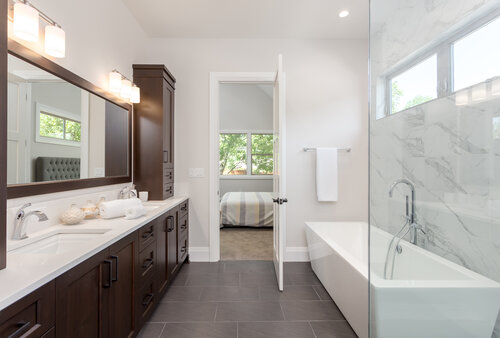
Is It Time to Update Your Bathroom?

Just like your bedroom, your bathroom should be a relaxing place. Whether you unwind in the shower or with a hot bath, making sure your bathroom is a place of comfort and not stress is key to making your home a happier place. Because it is a room you will definitely spend time in every single day, these signs might indicate that it is time for some changes and some tips to help you do so.


1. Poor Lighting

You can consider investing in brighter bulbs and updating your light fixtures.


2. No Storage Space

You may want to install a larger vanity or additional shelving about the toilet


3. Outdated Paint Color

Updating your wall color with something more neutral, light, and timeless can help bring your bathroom back to life.


4. That ‘Bathroom’ Scent

Checking for mold, fixing any leaks, or adding ventilation can help relieve any scent you can’t seem to get rid of.


5. Leaks

Calling a plumber to make repairs is usually necessary if you have brown water stains.


6. Time to Sell

If you’re getting ready to sell, updating whatever needs updating will increase your home value.

Posted in Home Trends
Feb. 27, 2020

Reducing Closet Clutter


The closet might just be the hardest place to reduce clutter in the home. So often, we find ourselves using closets as the one space in the home that we allow a little chaos. Whether we use it as the space to keep unfolded laundry or to tuck away things that we forgot to clean up before having guests over, closets don’t always get the de-cluttering treatment they deserve. Here are a few ways to reduce closet clutter and in turn, reduce the stress it might be causing.


GROUPING THINGS 

The easiest way to keep your closet organized is to have a grouping system. You may not be someone who color coordinates your closet, but you can group work shirts together, and casual pants, etc. in a way that will make it easier to find and easier to put away.


SHELVING THAT MAKES SENSE

Your current shelving set up might not be ideal for you. Take the time to group and sort your clothes an see what you may be missing. Maybe you need less shelving as a way to make space for more hanging clothes, or more shelving for folded pants.


ORGANIZATION BASED ON USE

If you have a walk in closet, you can make your life easier by storing what you use frequently closest to the entrance. If you don’t store seasonal clothing, this will help greatly in making sure the season in use is always the most accessible.


UNIFORMITY IS KEY

The satisfaction of an aesthetically pleasing closet can help you to keep things de-cluttered. Get matching hangers, and invest in matching organizing bins or shoe boxes if your closet needs those items.


Posted in Home Trends